

When I joined a consumer wellness brand as Head of Marketing, the purchase flow was working. Customers were buying. Revenue was coming in. On the surface, things looked fine.
But the backend was hollow.
There was no structured post-purchase journey. No education. No reinforcement. No referral loop. Customers were buying and then disappearing into silence. The brand had figured out acquisition. It hadn’t figured out what to do with customers once it had them.
That’s where most brands stop thinking. And it’s exactly where the real money is.
What the Post-Purchase Window Actually Is
The 48 hours after a first purchase are the most psychologically charged moment in the entire customer relationship. The customer has just made a decision. They’re open. They’re curious. They want to be told they made the right call.
Most brands waste this window with a generic order confirmation email and a discount code for the next purchase. That’s not a retention strategy. That’s a missed conversation.
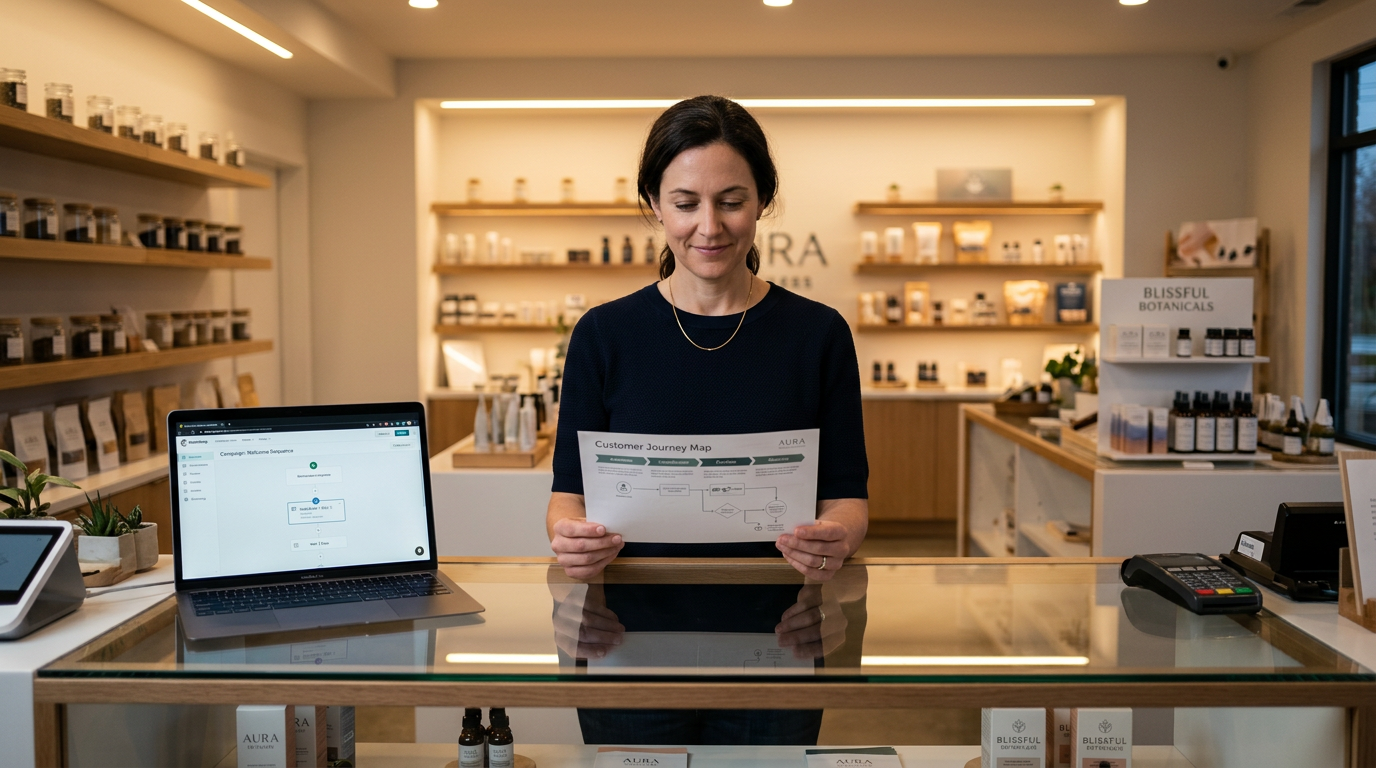
I built a series of Klaviyo automation flows designed around three specific jobs. First: teach the customer exactly how to use the product so they actually experience the result it promises. Second: reinforce the decision they just made with strong social proof and a direct comparison to alternatives. Third: give them a natural reason to tell someone else about it.
One of the sharpest angles we used was a direct comparison on duration. Our product was positioned around full-day relief. Competitors were positioned around four-hour windows. That’s not just a product differentiator — it’s a story a customer can repeat to a friend. We built that story into the flow and let it do the work.
Why It Worked
The automation didn’t succeed because it was clever. It succeeded because it was honest.
We weren’t pushing customers toward another purchase. We were helping them get real value from the one they’d already made. That distinction matters more than most marketers realize. When someone feels genuinely helped, they come back. When they feel sold to, they don’t.
The numbers reflected that. One in two first-time buyers purchased at least one additional product. Nearly one in three bought the same product again. LTV grew by close to 300% year over year. The retention engine became a core part of the company’s value story — and contributed directly to the brand being acquired by the largest player in the industry.
None of that started with a better ad. It started with a better email sent the day after the first purchase.
What Klaviyo’s New AI Tools Change About This
Klaviyo just released over 260 MCP tools that allow AI agents to autonomously generate segments and execute lifecycle marketing workflows. That’s a meaningful shift. The operational overhead that used to make post-purchase automation feel like a big project — the segmentation logic, the trigger setup, the flow architecture — is about to get dramatically lighter.
That’s good news for retention teams. But it comes with a real risk.
The technology only works if the strategy underneath it is sound. AI can build a flow in minutes. It can’t tell you what a customer needs to hear the day after they buy something they’ve never tried before. It can’t feel the difference between a message that builds trust and one that just asks for money.
That judgment still belongs to the marketer.
The brands that’ll win with these tools are the ones that already understand what post-purchase automation is supposed to do: educate, validate, and create a clear path forward. The tools make execution faster. They don’t replace the thinking.
A sale is not the end of the funnel. It’s the first step in the relationship. Build the system that treats it that way, and the numbers will follow.