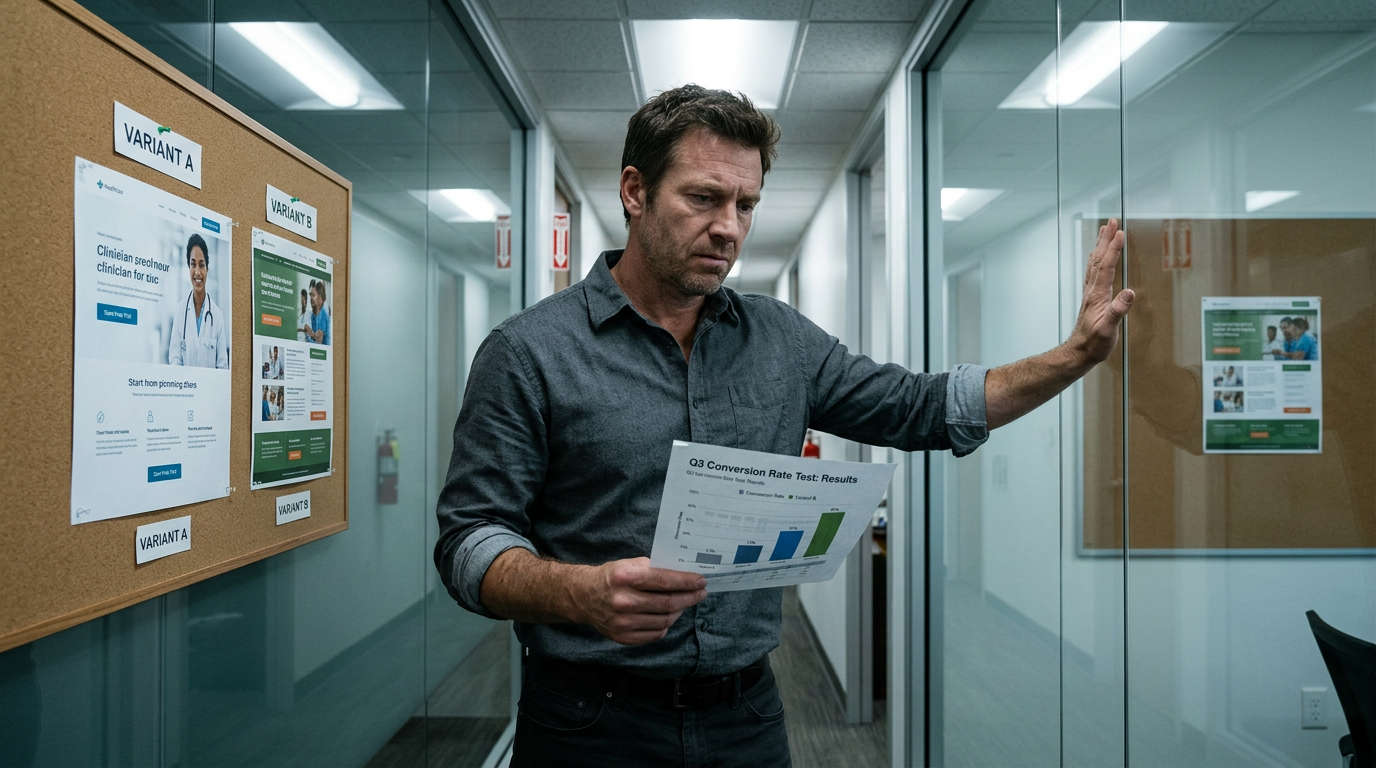


Scaling user acquisition depends less on finding one perfect channel than on measuring every channel at cohort level and cutting the losers fast. In our Eyecon case study, that discipline helped take monthly UA spend from about $10,000 to roughly $600,000, while the average payback period fell from over a year to 2–3 months. The rules are simple to state: set the kill number before you spend, cut within days, and decide in advance where the freed-up budget goes.
How do you decide when to cut a UA channel?
You decide before the money goes out. The case study describes more than ten acquisition platforms tested under a strict “test, optimize, scale or stop” model, including Google App Campaigns, Meta, TikTok, and OEM partners. In a fragmented market, you can’t know where your users are until you go and look, and betting the whole budget on one platform is a guess with expensive consequences.
Wide testing without a kill switch is expensive chaos, so the benchmarks come first. In the case study, each platform had a CAC threshold and an LTV target before it received budget, and underperforming channels were stopped within days to protect capital. Our own rule set adds two more numbers: a 12-month payback ceiling and ROI checkpoints at fixed intervals. A channel that shows no early sign of hitting them is stopped at that checkpoint, not at a quarterly review or after a “let’s give it more time” conversation.
Expect most tests to miss, especially on niche networks and smaller OEM partners. The fast cut is what turns a failed test into useful information instead of wasted budget.
Where should the freed-up budget go?
When a channel is cut, its money has to move right away. This is where many teams hesitate: freed-up budget sits idle while they debate the next move.
Decide the answer in advance: consistent winners get the money first. For us, that was Google App Campaigns, the channel that kept hitting its numbers and so kept getting fed. The case study states the principle behind it: budget followed measurable user quality, not platform popularity.
Testing many platforms is the discovery process, and discovery pays off only if you act on what you find, fast. The same payback test applies to product bets: user demand isn’t a business case until the unit economics work.
Why do fast cuts depend on clean measurement?
Fast cuts are only safe when you trust the data. The case study’s own conclusion is that scaling UA is at heart a financial transparency problem, solved by building a reliable measurement layer first. Every channel was measured at cohort level through Adjust and Singular, which connected media spend directly to monetization and tracked LTV-to-CAC ratios, ROAS by acquisition month, and profitability by market. We pair that kind of setup with strict UTM hygiene and one attribution model across all channels.
If you can’t trust your data, you second-guess and you wait, and waiting is where budgets go to die. If you can, scaling becomes a financial decision rather than a marketing guess.
The spend growth is the headline, but faster payback is the bigger result. Money that comes back in 2–3 months instead of more than a year can be recycled about four times faster, and in the case study, that is what allowed continuous reinvestment.
Does Google’s ad tech ruling change how you should run UA?
Not directly, but it makes the same discipline more valuable. On September 2, 2026, Judge Leonie Brinkema of the U.S. District Court for the Eastern District of Virginia issued the remedies order in United States v. Google LLC, No. 1:23-cv-108. It rejected the plaintiffs’ structural remedies, including a divestiture of Google’s AdX ad exchange, and accepted most of the parties’ proposed behavioral remedies, as modified by the court.
The case covers open-web display advertising, meaning display ads on websites. The liability ruling put mobile app, in-stream video, and social media ads outside the relevant markets, so much of what app-install campaigns buy is outside the case. According to the court’s memorandum opinion, once the final judgment takes effect:
- AdX will have to send real-time bids to rival publisher ad servers the same way it sends them to DFP, Google’s own ad server, and AdX and DFP will have to work with Prebid. Publishers will be able to export their DFP data and AdX bid data to rival ad servers.
- Google Ads (called AdWords in the opinion) will be allowed to prioritize bidding on AdX for open-web display inventory only to achieve the advertiser’s return on investment, and Google’s ownership of AdX can’t be a factor. The court did not extend this rule to Google’s other buying tool, DV360.
That buy-side rule is the part closest to app marketers. App Campaigns run in Google Ads, and Google’s help pages say they can appear on the Google Display Network, which includes mobile websites, so some of their impressions can fall under it.
The judgment will run for six years and take effect 60 days after the court enters it. The parties’ joint proposed final judgment, filed on October 2, 2026, still marks disputed provisions, including when a publisher may export its data. When we checked the public docket on October 23, 2026, no final judgment had been entered, so the exact terms and deadlines are not settled yet.
If your mix includes web display, such as web-to-app funnels, website retargeting, or App Campaign impressions on mobile sites, our read is that more exchanges and ad servers are likely to compete for the same impressions over the six-year term, and supply paths and prices may shift. More routes mean more places where budget can underperform quietly while a dashboard looks fine. Treat each new route like a new channel: set a benchmark before it gets budget, measure it at cohort level, and cut it if it misses.
Test widely, but scale by cutting fast. Know your kill number before you spend the first dollar, and you won’t confuse a bad channel with a slow one. These are the rules we bring to paid UA in our mobile app marketing work.
Sources: Our Eyecon case study (linked above; checked October 23, 2026). U.S. District Court for the Eastern District of Virginia, United States v. Google LLC, No. 1:23-cv-108: Order, Dkt. 1857 (September 2, 2026); Memorandum Opinion, Dkt. 1858 (dated September 2, 2026; unsealed September 16, 2026); and joint proposed final judgment, Dkt. 1861-1 (October 2, 2026). AdExchanger, report on the joint proposed final judgment (October 5, 2026). Google Ads Help, “About App campaigns” (checked October 23, 2026).
Updated October 23, 2026: we rewrote this post, re-checked its facts, and added sources.